
The construction industry accepts a remarkable amount of material waste as normal. Contractors order extra concrete to compensate for inaccurate batching. They discard returned material. They over-order cement and aggregates to ensure they do not run short. This waste is not inevitable. It is a direct consequence of imprecise measurement. A self-loading concrete mixer equipped with a modern weighing system achieves batching accuracy of ±2% or better across all components. A volumetric machine—which measures by bucket position rather than weight—may have errors of 10% or more. The difference between these two approaches is not trivial. Over a year of operation, the material savings from accurate weighing can exceed the price of self loading concrete mixer. This analysis quantifies those savings. It examines the sources of weighing error, the cost of that error, and the payback period for investing in precision. The conclusion is that accurate weighing is not an optional feature. It is a financial necessity for any contractor producing significant volumes of concrete.
The Cost of Inaccurate Batching
Cement Overuse and the Strength Margin
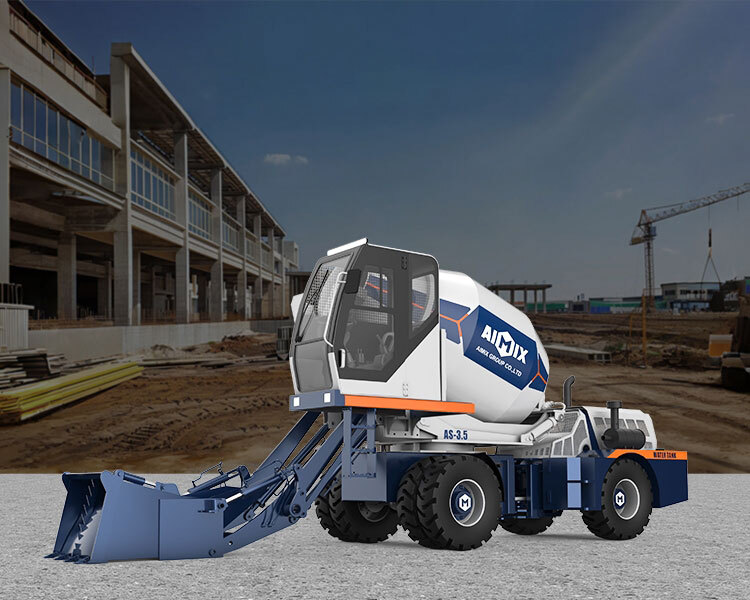
Cement is the most expensive component of concrete by weight. A typical mix contains 300 to 400 kilograms of cement per cubic meter. At current global prices of $80 to $120 per tonne, cement represents $24 to $48 per cubic meter of concrete. A volumetric self-loading mixer with ±10% accuracy may over-serve cement by 10% to ensure the mix meets strength requirements. That over-serve adds $2.40 to $4.80 per cubic meter. For a contractor producing 5,000 cubic meters annually, the excess cement cost is $12,000 to $24,000 per year. A weighing-accurate mixer with ±2% accuracy reduces the required safety margin. The operator can target the exact design mix without fear of falling short. The cement saving is 8% of the cement cost—$9,600 to $19,200 annually for a 5,000 cubic meter operation. This saving alone often exceeds the price difference between a volumetric machine and a weighing-accurate machine.
Aggregate Waste and the Disposal Problem
Aggregate is cheaper than cement, but the volumes are larger. A cubic meter of concrete contains 1,600 to 2,000 kilograms of aggregate. At $15 to $30 per tonne, aggregate represents $24 to $60 per cubic meter. Volumetric error affects aggregate as well as cement. An over-serve of aggregate by 10% adds $2.40 to $6.00 per cubic meter. For 5,000 cubic meters annually, that is $12,000 to $30,000 in wasted aggregate. The waste also requires disposal. Excess material must be hauled away, adding trucking and landfill costs. The accurate weighing system eliminates this over-serve. The operator batches precisely to the design mix. Aggregate consumption matches production exactly. The saving is direct and measurable.
Weighing System Technology and Accuracy Verification
Load Cell Configuration and Calibration
A weighing-accurate self loading mini concrete mixer uses strain gauge load cells. These sensors convert force into an electrical signal. Four load cells typically support the aggregate weighing hopper. Two additional cells support the cement weighing system. Water measurement may use a separate load cell or a calibrated flow meter. The resolution of these systems is typically 1 kilogram or better. The accuracy depends on calibration. The manufacturer should provide a factory calibration certificate. On-site verification requires certified test weights. The operator places known weights on each hopper and compares the displayed value to the actual weight. Any deviation beyond ±1% requires recalibration. This verification should be performed monthly or after any maintenance affecting the weighing system. AIMIX and other quality manufacturers provide calibration procedures in their documentation. Contractors who follow these procedures maintain accuracy throughout the machine's life.
Sources of Error in Volumetric Systems
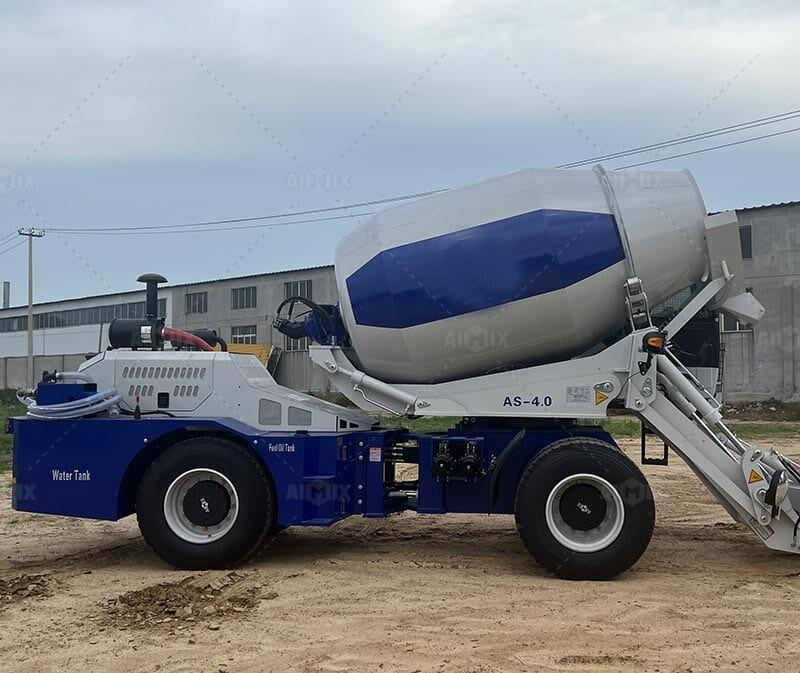
Volumetric systems estimate material quantity by bucket position or hydraulic cylinder extension. This method contains multiple sources of error. Aggregate moisture content changes the weight per bucket volume. Wet aggregate is heavier than dry aggregate. A bucket that contains 500 kilograms of dry aggregate may contain 550 kilograms of wet aggregate—a 10% error. Particle shape affects packing density. Angular aggregate leaves more air space than rounded aggregate. A bucket filled with angular aggregate may contain 15% less weight than the same bucket filled with rounded aggregate. Operator technique introduces further variation. A fast bucket fill leaves a rounded top. A slow fill leaves a flat top. The weight difference can be 5% to 10%. These errors are systematic. They cannot be eliminated by operator training. Only direct weight measurement resolves them. The volumetric machine appears cheaper at purchase. The weighing-accurate machine proves cheaper in operation.
Financial Justification and Payback Period
Sample Calculation for a 5,000 m³/Year Operation
A concrete example clarifies the numbers. A volumetric self-loading mixer costs $25,000. A weighing-accurate self-loading mixer costs $40,000. The price difference is $15,000. The contractor produces 5,000 cubic meters of concrete annually. The volumetric machine has ±10% accuracy. The weighing machine has ±2% accuracy. The cement saving is 8% of 350 kilograms per cubic meter at $100 per tonne. That is 28 kilograms per cubic meter saved, or $2.80 per cubic meter. For 5,000 cubic meters, the annual cement saving is $14,000. The aggregate saving adds another $2,000. Total annual material saving is $16,000. The payback period for the additional $15,000 investment is 11 months. After the first year, the saving continues. Over five years, the weighing-accurate machine saves $80,000 in material costs compared to the volumetric machine. This calculation assumes no increase in productivity or reduction in rejected concrete. In practice, the benefits are larger.
Intangible Benefits: Quality, Reputation, and Compliance
Material savings are the measurable benefit. Intangible benefits are equally significant. Accurate batching produces consistent concrete strength. Consistent strength reduces the risk of structural failure. It also reduces the need for destructive testing. A contractor with documented batching accuracy can provide confidence to engineers and clients. This confidence wins contracts. It also protects against liability. Concrete that fails strength testing due to inaccurate batching can lead to costly remediation. The weighing-accurate mixer reduces this risk. The price premium for accurate weighing is not an expense. It is an investment in material efficiency, quality assurance, and risk reduction. Contractors who understand this relationship specify weighing systems on their self loading mixer. Those who do not continue to waste material, lose money, and accept risks that their competitors have eliminated. The choice is clear. The data is available. The justification is complete.