
The rapid industrialization of the Tanzanian landscape necessitates a paradigm shift in material fabrication and delivery methodologies. As the nation embarks on ambitious developmental trajectories, the integration of the portable concrete plant for sale emerges as a quintessential solution to the geographical and logistical constraints inherent in East African topography. These mobile installations serve as a nexus of efficiency, allowing for the immediate synthesis of high-grade concrete at the point of application, thereby mitigating the thermal and chemical degradation often associated with protracted transit times. By decentralizing production, contractors can maintain a rigorous standard of structural fidelity across varied climatic zones.
Optimizing Pavement Longevity Through Mobile Batching Precision
The construction of arterial road networks across the Tanzanian interior demands a level of consistency that conventional, stationary batching facilities struggle to provide over vast distances. Portable concrete plants facilitate the continuous pouring of rigid pavements, a critical factor in preventing "cold joints" which are the primary precursors to premature structural cracking. This mobility allows the production unit to leapfrog alongside the advancing paving train, ensuring that the rheological properties of the mix remain optimal for compaction. Furthermore, the ability to calibrate aggregate moisture content in real-time allows engineers to counteract the volatile humidity levels encountered in regions ranging from the coastal plains to the central plateau.
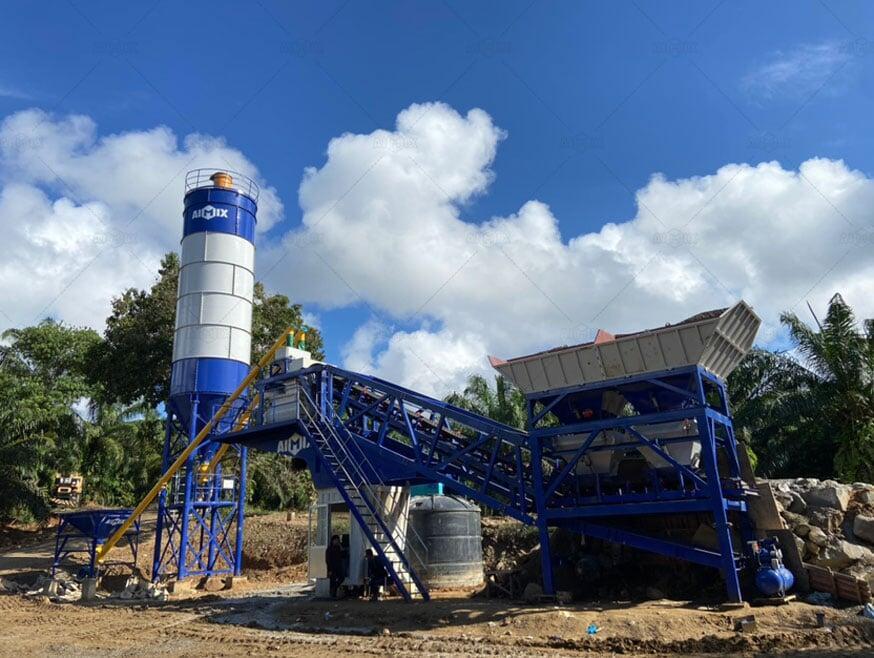
Reliability in road construction is not merely a function of material volume but of the precision in the water-to-cement ratio. Mobile units equipped with automated moisture probes ensure that every cubic meter of concrete meets the specified modulus of rupture required for heavy-duty logistical corridors. This technical rigor is essential for the longevity of the Standard Gauge Railway (SGR) support structures and accompanying feeder roads, where the dynamic loading from freight transportation is substantial. By eliminating the dependence on distant supply chains, the portable concrete plant in Tanzania acts as a safeguard against the "waiting time" that often compromises the slump and workability of the concrete.
Expediting Residential Development and Urban Expansion
Tanzania’s urban centers, particularly Dar es Salaam and Dodoma, are currently experiencing an unprecedented surge in housing demand, requiring a rapid escalation in vertical and horizontal construction. The portable concrete plant addresses the "spatial friction" found in dense urban environments where traditional transit mixers are hampered by traffic congestion. By establishing a compact production footprint directly within a housing estate development, developers can achieve a volumetric throughput that aligns with aggressive project milestones. This localized production model significantly reduces the carbon footprint of the project by minimizing the total ton-miles associated with material haulage.
Furthermore, the architectural diversity of modern Tanzanian housing requires a versatile approach to concrete mix designs. Portable plants allow for the seamless transition between high-strength structural concrete for multi-story foundations and lightweight insulating concrete for aesthetic facades. The implementation of planetary mixing technology within these units ensures a superior homogeneity of the cement paste, which is vital for the durability of reinforced structures in coastal environments prone to salt-air corrosion. Through this technological adoption, the private sector can deliver high-quality residential units at a lower cost-per-square-meter, effectively bridging the gap in the affordable housing market.
Sustaining Large-Scale Infrastructure and Hydroelectric Initiatives
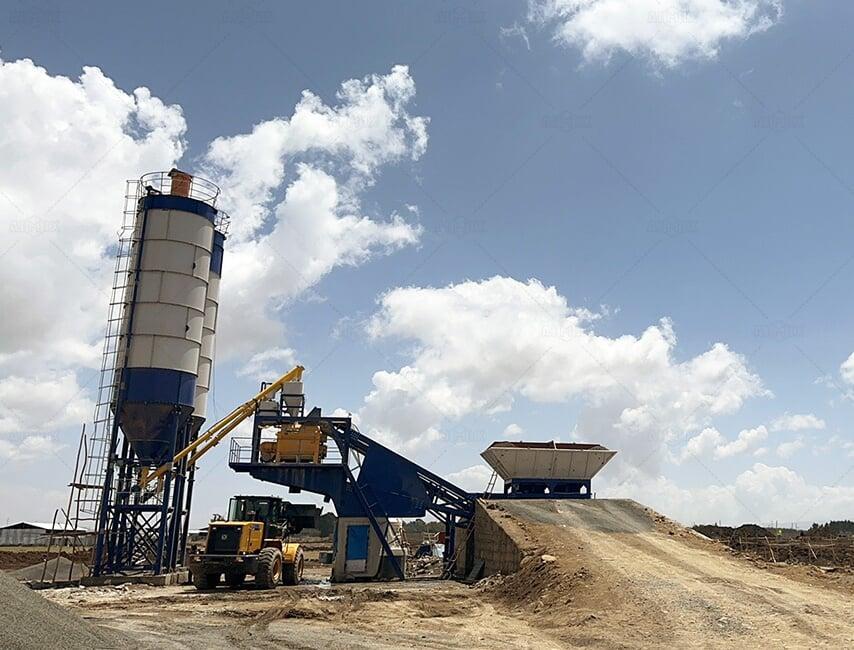
The development of critical infrastructure, such as the Julius Nyerere Hydropower Project, illustrates the imperative for high-capacity material solutions in remote, ecologically sensitive areas. Portable concrete plants offer a "zero-legacy" footprint, as they can be decommissioned and relocated once the specific phase of the dam or spillway construction is finalized. This adaptability is crucial for maintaining the environmental integrity of the surrounding biosphere while fulfilling the rigorous concrete demands of massive hydraulic structures. The ability to incorporate local volcanic pozzolans into the mix via specialized silos further enhances the sustainability matrix of these projects.
Engineering oversight is enhanced when the source of production is within the immediate visual and technical purview of the site laboratory. The instantaneous feedback loop between the pouring site and the batching operator allows for the immediate rectification of any chemical imbalances, ensuring the impermeability of water-retaining structures. In the context of bridge construction across the Great Rift Valley, these mobile concrete plants for sale provide the necessary agility to maneuver through precarious terrain, delivering concrete for piers and abutments where traditional access is non-existent. Ultimately, the portable concrete plant stands as the vanguard of Tanzania’s structural evolution, providing the technical resilience needed to build a robust and interconnected future.