
Embarking on a construction project in a remote location presents a unique set of challenges that can stifle progress and inflate budgets. The sheer difficulty of transporting materials and heavy machinery to inaccessible sites often becomes the primary obstacle. Traditional ready-mix concrete trucks are rendered ineffective when faced with rugged terrain, narrow pathways, or simply the absence of paved roads. This logistical impasse necessitates a more agile and self-sufficient solution. Portable concrete pumps for sale emerge as the quintessential answer, combining mobility, independence, and power to conquer the isolation that halts conventional methods. These integrated machines bring the entire concrete production process directly to the point of application, transforming seemingly impossible projects into achievable endeavors.
Overcoming Geographic and Logistical Hurdles
The most immediate advantage of a portable concrete pump with a mixer is its profound ability to negate geographic constraints. Its design philosophy prioritizes accessibility. Unlike their bulky, stationary counterparts or cumbersome truck-mounted pumps, these units are engineered for nimbleness. They can be towed behind a standard vehicle to the project site, requiring only a modest footprint for operation. This compactness is invaluable when working in confined spaces or environmentally sensitive areas where minimizing disturbance is paramount.
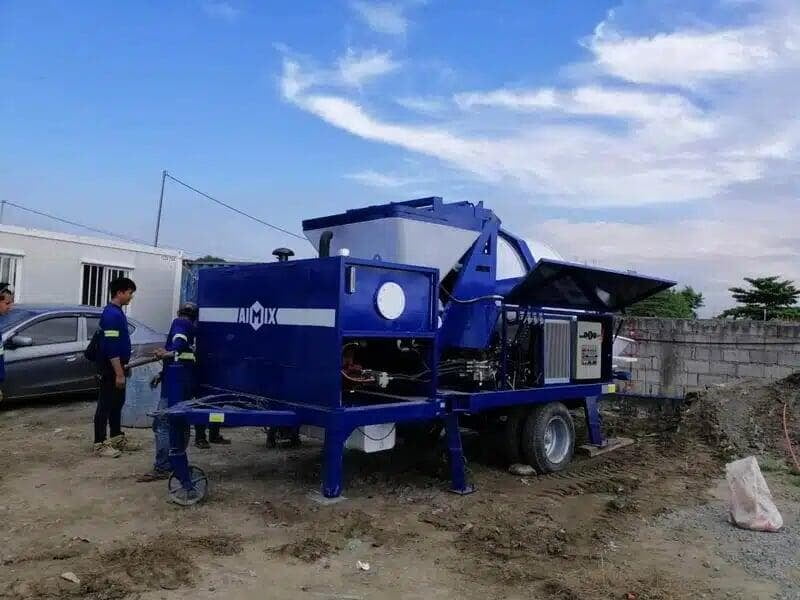
Upon arrival, their capabilities truly shine. The robust chassis and often four-wheel-drive capabilities allow them to traverse soft ground, uneven landscapes, and steep inclines that would immobilize other equipment. This mobility ensures that the machine can be positioned optimally, often directly adjacent to the pour site. This eliminates the need for extensive secondary conveying systems or the manual labor of moving wheelbarrows of concrete over difficult ground, a process that is both time-consuming and physically demanding. The small concrete pump machine’s very presence solves the fundamental problem of access, turning a remote site from a liability into a manageable workspace.
The Synergy of Integrated Mixing and Pumping
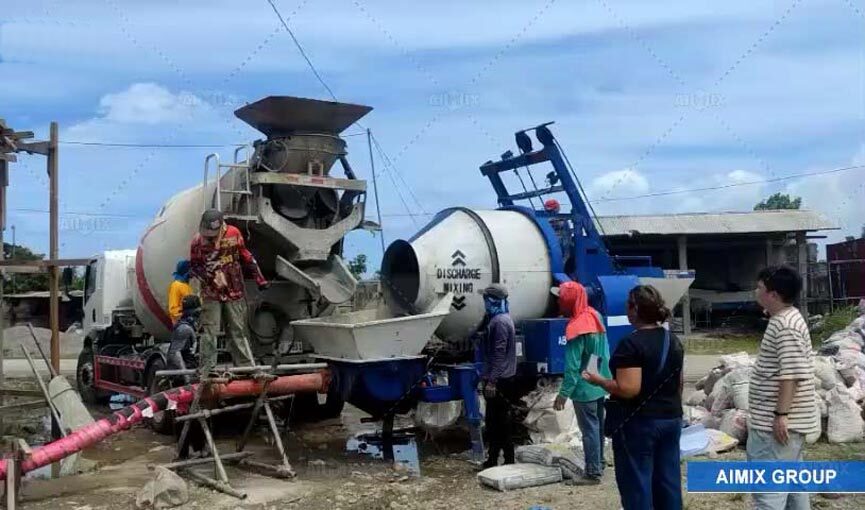
The genius of this equipment lies in the synergistic combination of two critical functions: mixing and pumping. This integration creates a closed-loop system that guarantees efficiency and quality control. Dry ingredients—cement, aggregates, and water—are transported to the site, a far simpler task than moving ready-mix concrete, which has a limited pot life. The onboard mixer then produces batches of concrete on demand, ensuring a continuous, fresh supply directly fed into the pump.
This on-site production is a game-changer for quality assurance. The mix design can be meticulously controlled and adjusted in real-time based on ambient conditions, a level of precision unattainable with pre-mixed concrete that may have begun setting during a long transit. The pump then delivers this homogenized mixture with consistent pressure through flexible hoses, allowing for precise placement in difficult-to-reach areas like foundations, footings, or wall forms. This seamless workflow from raw materials to final placement, all managed by a single piece of equipment, streamlines operations and mitigates the risk of material waste or segregation.
Maximizing Efficiency and Reducing Project Costs
From a project management perspective, the economic argument for these machines is compelling. Their all-in-one nature leads to significant reductions in both capital and operational expenditure. There is no longer a need to coordinate and pay for multiple pieces of equipment—a batching plant, a transit truck, and a separate pump—along with their respective operators. This consolidation drastically simplifies logistics and reduces the labor footprint on site, which is especially beneficial in areas where skilled workers are scarce.
Furthermore, the acceleration of the project timeline is a direct contributor to cost savings. The elimination of transit time for concrete trucks and the swift, continuous pouring capability prevent costly delays. Projects progress with a cadence that would be unthinkable using traditional methods in a remote setting. This efficiency translates into earlier project completion, which not only saves on ongoing costs but also allows the constructed asset to begin generating value sooner. The initial investment in the technology is quickly offset by the compounded savings in labor, equipment rentals, and time.
Versatility Across Diverse Project Types
The applicability of portable concrete mixing pump extends across a remarkably broad spectrum of projects. They are the unsung heroes of rural development, enabling the construction of essential infrastructure such as small bridges, culverts, water tanks, and community buildings in areas previously considered too remote. In the agricultural sector, they are indispensable for creating silo bases, irrigation channels, and stable foundations for equipment.
Their utility is also proven in more specialized fields. Environmental projects, such as the construction of retaining walls to prevent erosion or platforms for monitoring equipment in delicate ecosystems, benefit immensely from the machine’s minimal ground disturbance and self-contained operation. Even in urban settings, their small size is an advantage for renovations or backyard projects where access for large trucks is restricted. This versatility ensures that regardless of the project's nature or location, this technology provides a robust, reliable, and efficient concrete solution, proving that remoteness is no longer a barrier to building.