
The United Arab Emirates' construction landscape has undergone a profound transformation over the past decade, characterized by ambitious megaprojects, rapid urbanization, and an insatiable demand for infrastructure development. In this dynamic environment, stationary concrete pumps for sale have emerged as the equipment of choice for contractors and construction companies across the Emirates. These machines, distinguished by their fixed installation and high-capacity performance, have become indispensable assets on construction sites ranging from the towering skyscrapers of Dubai to the expansive industrial complexes of Abu Dhabi. The convergence of the UAE's unique construction requirements and the inherent advantages of stationary concrete pumps has created a symbiotic relationship that continues to drive their widespread adoption throughout the region.
Unmatched Efficiency for Large-Scale Projects
Stationary concrete pumps offer a level of operational efficiency that mobile alternatives simply cannot match, particularly in the context of the UAE's ambitious construction timeline. These machines are engineered for continuous, high-volume concrete production, with capacities ranging from 40 to 90 cubic meters per hour—far exceeding the output capabilities of mobile units. This superior throughput capability translates directly into accelerated project completion, a critical advantage in a market where time-to-completion often determines profitability. The fixed installation design allows for optimized material flow and reduced setup time, enabling contractors to maintain consistent production schedules without the logistical complexities associated with mobile equipment relocation. Furthermore, the centralized control systems integrated into stationary pumps provide real-time monitoring of production metrics, allowing project managers to make data-driven decisions that maximize productivity while minimizing waste.
Superior Concrete Quality and Consistency
The precision engineering of stationary concrete pumps ensures unparalleled consistency in concrete quality, a non-negotiable requirement for the UAE's high-rise construction and infrastructure projects. These machines employ advanced batching technology that maintains strict adherence to mix design specifications, with automated systems controlling water-cement ratios, aggregate proportions, and admixture dosages with millimeter precision. The result is concrete that meets or exceeds the stringent quality standards demanded by UAE building codes and international construction norms. The stationary configuration also minimizes the risk of material segregation during transport, as concrete is pumped directly from the mixing unit to the placement location through a continuous pipeline system. This closed-loop delivery method preserves the integrity of the concrete mix, eliminating the variables introduced by multiple handling points and transit vehicles that can compromise material quality.
Cost-Effectiveness Over Project Lifecycle
While the initial investment in stationary concrete pumps may be higher than mobile alternatives, their long-term cost-effectiveness becomes apparent when analyzed across the entire project lifecycle. The higher production capacity reduces the number of units required to meet project demands, resulting in lower capital expenditure per cubic meter of concrete produced. Operational costs are further optimized through reduced labor requirements—concrete pumps for sale in UAE typically require smaller crews for operation and maintenance compared to mobile fleets. Energy efficiency is another significant factor; stationary units benefit from fixed power connections that are more economical than the diesel generators often required for mobile equipment. Additionally, the durability and reliability of stationary pumps translate into lower maintenance costs and reduced downtime, factors that can have substantial financial implications on projects with tight schedules and penalty clauses for delays.
Adaptability to UAE's Unique Construction Challenges
The UAE's construction environment presents a unique set of challenges that stationary concrete pumps are exceptionally well-equipped to address. The region's extreme temperatures, which can exceed 50°C during summer months, place immense stress on construction equipment. Stationary pumps are designed with robust cooling systems and heat-resistant components that maintain optimal performance even under these demanding conditions. Their fixed installation also provides stability on the sandy, shifting terrain that characterizes many construction sites in the Emirates, reducing the risk of equipment failure or safety incidents. The pumping distance capabilities of stationary units—reaching up to 800 meters vertically and 1,200 meters horizontally—make them ideal for the UAE's signature high-rise projects, where concrete must be delivered to significant heights without compromising quality or efficiency.
Environmental and Regulatory Compliance
Stationary concrete pumps offer distinct advantages in meeting the UAE's increasingly stringent environmental regulations and sustainability goals. These units can be equipped with comprehensive dust collection systems, noise reduction technology, and wastewater recycling capabilities that minimize their environmental footprint. The fixed installation allows for the implementation of permanent environmental control measures that would be impractical or impossible with mobile equipment. This compliance with environmental standards not only reduces the risk of regulatory penalties but also aligns with the UAE's broader vision for sustainable development, enhancing the reputation of construction companies that prioritize environmental responsibility. Additionally, stationary pumps can be integrated with automated monitoring systems that track emissions, energy consumption, and waste generation, providing valuable data for sustainability reporting and continuous improvement initiatives.
Integration with Modern Construction Methodologies
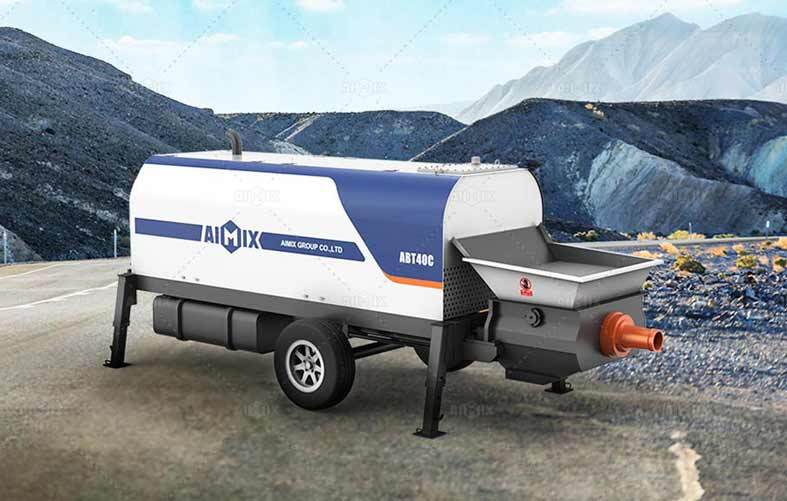
The adoption of stationary concrete pumps aligns seamlessly with the UAE's embrace of modern construction methodologies such as Building Information Modeling (BIM), prefabrication, and lean construction principles. These small concrete line pumps for sale can be integrated into digital project management systems, allowing for real-time coordination between concrete production, delivery schedules, and on-site placement activities. The high degree of automation enables just-in-time concrete delivery, reducing material waste and storage requirements on congested urban construction sites. Furthermore, stationary pumps support the use of specialized concrete mixes—including self-compacting concrete, high-performance concrete, and fiber-reinforced concrete—that are increasingly common in the UAE's advanced construction projects. This technological integration positions stationary concrete pumps not merely as concrete delivery tools but as integral components of a digitally connected, efficiency-driven construction ecosystem.
Future-Proofing Construction Operations
The strategic value of stationary concrete pumps extends beyond immediate project requirements to encompass long-term operational resilience and scalability. As the UAE continues to invest in infrastructure development under initiatives like Vision 2030, construction companies that have invested in stationary pumping capacity are better positioned to capitalize on future opportunities. These units can be repurposed for multiple projects within the same region, amortizing their cost over an extended operational lifespan. The modular design of many stationary pumps allows for capacity upgrades as project requirements evolve, providing flexibility without the need for complete equipment replacement. This future-proofing capability is particularly valuable in the UAE's dynamic construction market, where project scales and technical requirements can change rapidly in response to economic conditions, regulatory changes, or technological advancements.
Case Study: Burj Khalifa Construction
The construction of the Burj Khalifa, the world's tallest building, serves as a compelling case study in the capabilities of stationary concrete pumps in the UAE context. During this landmark project, several powerful BSA 14000 SHP D super-high-pressure stationary pumps were deployed in conjunction with MX 28-4 and MX 32-4 stationary placing booms. These machines successfully pumped over 165,000 cubic meters of high-strength concrete to heights exceeding 606 meters—a world record at the time. The project demonstrated the ability of stationary pumps to maintain consistent performance under extreme conditions, with concrete being placed at a rate of one storey every three days. This achievement underscored the reliability, precision, and efficiency that stationary concrete pumps bring to even the most challenging construction projects, solidifying their reputation as essential equipment for the UAE's ambitious building agenda.
Conclusion: The Strategic Imperative
The widespread adoption of stationary concrete pumps in the UAE represents more than a simple equipment preference—it embodies a strategic response to the unique demands of the region's construction industry. The combination of high production capacity, superior quality control, long-term cost-effectiveness, and adaptability to challenging conditions makes these machines an indispensable asset for contractors operating in the Emirates. As the UAE continues to pursue its vision of becoming a global leader in infrastructure and urban development, stationary concrete pumps will remain at the forefront of construction technology, enabling the realization of projects that push the boundaries of engineering and architectural excellence. Their proven track record, from the Burj Khalifa to countless other landmark developments, confirms their status as the equipment of choice for contractors who prioritize efficiency, quality, and long-term value in the competitive UAE construction market.