
The selection of a concrete pump truck's boom length is a critical decision that directly influences a project's logistical feasibility, economic viability, and placement efficiency. While a spectrum of boom lengths is available, ranging from compact 20-meter units to colossal 60-meter-plus giants, the range of 38 to 42 meters has consistently emerged as the predominant choice for a majority of general contracting and mid-rise construction applications. This prevalence is not arbitrary; it is the result of a convergence of structural engineering principles, practical job site requirements, and financial pragmatism. This specific range represents an optimal equilibrium, providing sufficient vertical and horizontal reach to service a vast array of common structures without incurring the significant cost, weight, and setup penalties associated with larger models. It is a specification that effectively balances capability with accessibility.
The Reach-Sweet-Spot: Defining the Operational Envelope
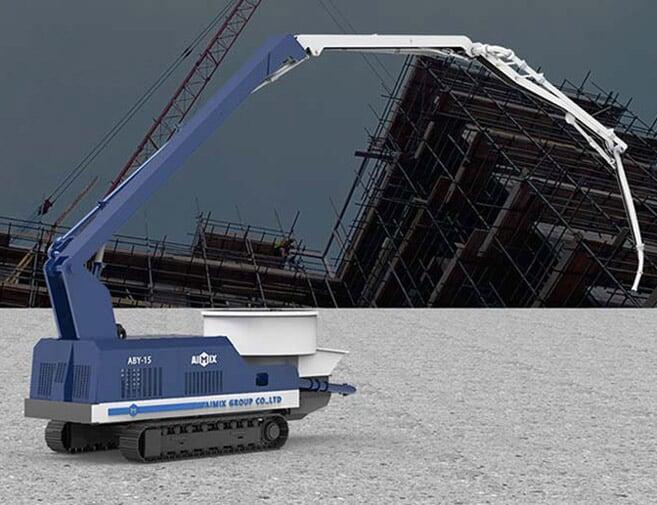
A concrete pump truck for sale in the 38 to 42-meter category possesses a vertical reach capable of servicing structures approximately 12 to 15 stories tall. This encompasses a substantial portion of the commercial and multi-family residential construction market, including mid-rise office buildings, hotels, apartment complexes, and hospital towers. The horizontal reach is equally consequential. From a single setup point, a 40-meter class boom can typically cover a radial area with a diameter of 70 meters or more, depending on the boom's articulation. This operational envelope allows the pump to service a significant portion of a standard building footprint or a large podium deck, minimizing the need for costly and time-consuming relocations during a pour. This reach is sufficient to place concrete in locations that are otherwise inaccessible to ready-mix trucks, such as deep basements, over existing structures, or across bodies of water on site.
Structural and Mechanical Efficiency at Scale
From an engineering perspective, the 38-42 meter range represents a point of high efficiency before the law of diminishing returns imposes severe penalties. The design of a telescopic boom is a constant battle against deflection and self-weight. As boom length increases, the structural demands to maintain rigidity under the load of concrete and the dynamic forces of operation escalate non-linearly. This necessitates heavier-grade steels, more robust hydraulic cylinders, and more complex reinforcement in the boom sections. A 40-meter boom can be engineered with a manageable weight profile and a reliable, well-understood hydraulic system. Progressing to a 50 or 60-meter boom, however, requires a substantial increase in material and mechanical complexity to control boom whip and ensure precision placement, which directly translates into higher manufacturing costs, greater fuel consumption, and more demanding maintenance protocols.
The Economic Equilibrium: Balancing Cost and Capability
The economic argument for the 40-meter class pump is compelling for both equipment owners and project contractors. For the pump owner or rental company, this size of pump represents the most fungible asset. It is in high demand for a wide variety of projects, ensuring high utilization rates. Its purchase price and operating costs are significantly lower than those of a larger, more specialized pump, leading to a more favorable return on investment and a shorter payback period. For the general contractor, hiring a pump in this range is the most cost-effective solution for the majority of their needs. They pay a premium for a 50-meter pump only when absolutely necessary. The 38-42 meter mobile concrete pump truck provides the necessary performance for most applications without the financial burden of over-specifying, making it the default and most economical choice for standard high-rise and large horizontal slab work.
Versatility Across the Modern Project Portfolio
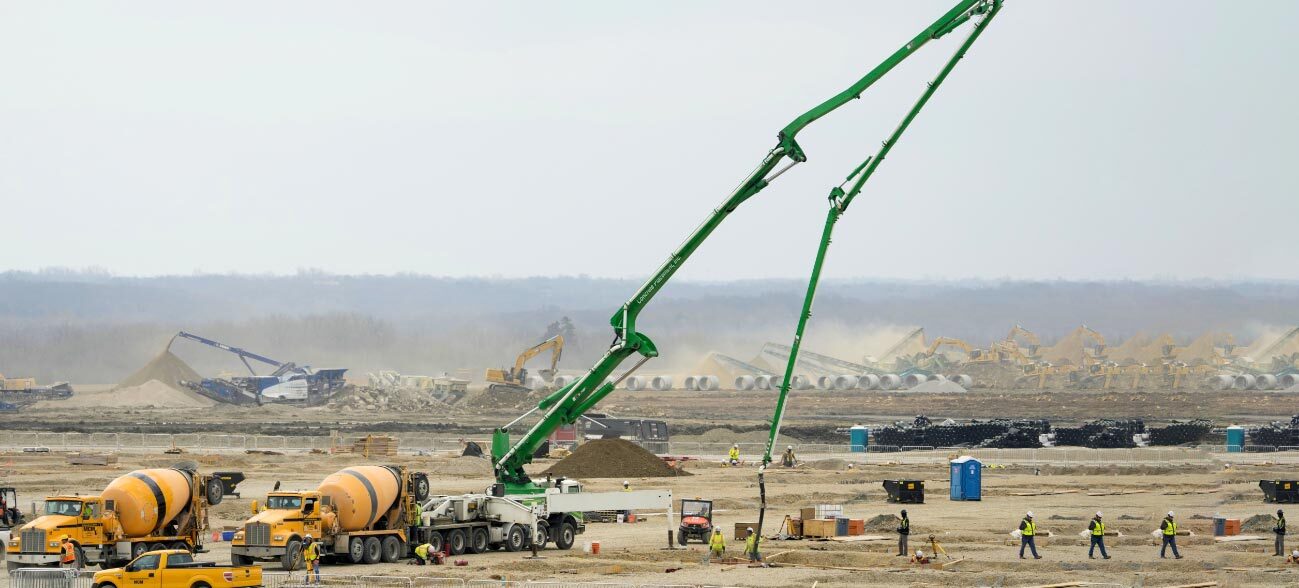
The true value of this boom length category lies in its exceptional versatility. It is not a specialized tool but a general workhorse capable of adapting to a diverse project portfolio. On a given day, the same pump could be used to place concrete for the columns of a 10-story building, the expansive floor slab of a warehouse, and the intricate foundations of a bridge abutment. This adaptability extends to concrete mix designs as well. The pumping system on these units is powerful enough to handle standard structural mixes, self-consolidating concrete (SCC), and mixes with moderate fiber content. This eliminates the need for a contractor to maintain a fleet of highly specialized pumps for different tasks. The 40-meter pump is the construction industry's equivalent of a multi-purpose vehicle, capable of performing adequately in nearly every common scenario, which justifies its status as the gold standard.
The Urban Fit: Navigating Constrained Job Sites
A critical, and often decisive, factor in modern construction is the urban job site. These sites are frequently characterized by limited laydown area, tight access roads, and proximity to adjacent properties. The physical dimensions and setup requirements of a pump truck are a major logistical consideration. A 38-42 meter pump truck, while still a large vehicle, is more maneuverable and requires a smaller operational footprint for outrigger deployment than its larger counterparts. It can often be positioned on a public street or a constrained site where a 50-meter concrete pumping machine for sale would be impossible to set up safely and legally. Furthermore, the ability to "plumb the boom" – to snake the articulated sections over, under, or around obstacles – is a key feature leveraged on congested sites. The 40-meter boom provides sufficient length and articulation points to navigate these complex paths and still reach the target pour location, a capability that is often more valuable than sheer vertical height. In the context of dense urban infill development, this balance of reach and physical practicality is indispensable.