
The logistical labyrinth of relocating heavy machinery, combined with the capricious nature of international tax law, often transforms the acquisition of a 100 TPH mobile crusher plant from a straightforward capital expenditure into a complex financial equation. For quarry operators and civil engineering contractors, the advertised base price is merely a prologue; the true cost of ownership only crystallizes when shipping surcharges and fiscal duties are factored into the final ledger. Understanding these variables is not merely an exercise in procurement—it is a strategic imperative to safeguard project margins and ensure operational liquidity.
The Geopolitics of Freight: Beyond the Bill of Lading
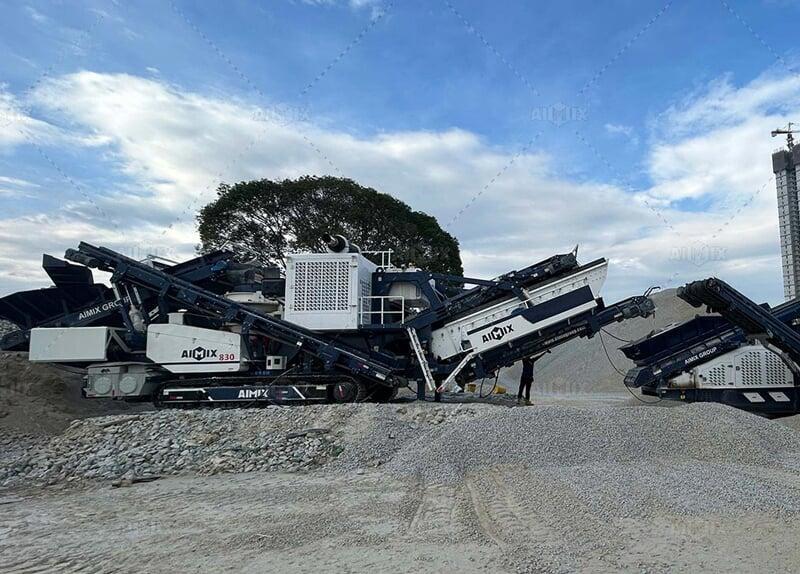
The journey of a 100 TPH mobile crusher from its manufacturing origin to a job site is a study in logistical asymmetry, where freight costs often eclipse the machine’s initial discount. Unlike static plant equipment, a mobile crusher plant for sale—despite its nomenclature—is an oversized, heavy consignment that typically mandates Roll-on/Roll-off (RoRo) shipping or flat rack containers, both of which are subject to volatile ocean freight indices. A surge in bunker fuel prices or a bottleneck at major transshipment ports like Rotterdam or Singapore can add $15,000 to $40,000 to the landed cost within a single quarter. Furthermore, the demarcation of Incoterms is critical; an Ex-Works (EXW) agreement places the onus of liability and cost for chassis loading, inland trucking, and port demurrage squarely on the buyer, exposing them to ancillary “accessorial charges” that are frequently underestimated in preliminary budgets. The weight distribution of the unit also dictates specialized lowboy trailer requirements for final-mile delivery, where permitting for oversize loads in certain jurisdictions introduces administrative delays that carry their own financial penalties.

Navigating Tariff Schedules and Customs Valuation
Once the vessel docks, the mobile stone crusher plant price undergoes a regulatory metamorphosis through the lens of customs valuation and tariff classification. The Harmonized System (HS) code assigned to the mobile crusher dictates the duty rate, but the assessed value for taxation—often a point of contention—is not merely the invoice price. Customs authorities in many jurisdictions insist on a valuation that includes the cost of insurance and freight (CIF), meaning the shipping costs you just paid now form a higher taxable base. Additionally, anti-dumping duties may lurk as a latent surcharge; if the country of origin has been flagged for subsidized heavy machinery exports, the applicable tariff can spike by 25% to 50%, fundamentally altering the capital outlay. There is also the nuance of “temporary importation” versus “permanent entry.” For contractors operating in mineral-rich regions under short-term concessions, bonding the crusher under a temporary import regime can defer duty payments, but this requires immaculate compliance with re-export deadlines to avoid punitive liquidated damages that accrue daily.
Ancillary Fiscal Obligations and the Total Cost of Ownership
Beyond the port, the fiscal architecture continues to assert its influence through value-added tax (VAT) mechanisms and use-tax assessments that vary significantly by jurisdiction. In many territories, VAT on capital equipment is a cash-flow event, requiring the buyer to remit 10% to 20% of the stone crusher machine’s total landed cost upfront, with recovery possible only after quarterly filing cycles. This creates a liquidity gap that procurement officers must internalize. Furthermore, the classification of the machine as “mobile” does not exempt it from property tax in certain regions, where it may be assessed as depreciable personal property based on the invoice value plus freight and installation. There is also the overlooked cost of “dismantling and assembly” in the context of tax credits; some tax regimes allow capitalization of freight and installation into the asset’s depreciable basis, offering long-term shielding against corporate income tax, while others require these costs to be expensed immediately. A failure to segregate these costs accurately during the accounting treatment of the procurement can lead to suboptimal tax positioning and an artificially inflated profit-and-loss statement for the fiscal year.