
Road rehabilitation projects across the United Arab Emirates require careful coordination between material production, traffic management, and construction activities. From urban road resurfacing in Dubai to highway maintenance in Abu Dhabi and infrastructure upgrades in Sharjah, contractors must deliver concrete according to tightly defined work schedules. Delays in material supply can disrupt paving operations, extend lane closures, and increase equipment standby time. A mobile concrete plant for sale provides a practical option for projects that need concrete production close to the work zone. However, selecting the right equipment involves more than calculating hourly output. Contractors must consider the rehabilitation sequence, available working hours, transport restrictions, site accessibility, and the time required to assemble and relocate the plant. Aligning deployment with the roadwork schedule helps maintain a dependable supply of concrete while limiting unnecessary mobilization and operational interruptions.
How Rehabilitation Schedules Determine Concrete Plant Deployment
Night Work and Short Road Closure Windows
Many busy roads require rehabilitation work to be scheduled during off-peak hours to reduce disruption to traffic. When contractors have only a limited nighttime window for concrete placement, material production must follow a precise timetable. A mobile concrete plant in UAE can support this arrangement by producing concrete near the construction site, reducing dependence on repeated deliveries from a distant production facility. Contractors should calculate the required concrete volume, mixing time, placement rate, and cleanup period before deciding when to start production. For example, a road section scheduled for overnight concrete repairs may require the plant to be commissioned before the closure begins. Aggregate stockpiles, cement supplies, water connections, and power arrangements should also be prepared in advance. These measures reduce the likelihood that setup activities will consume valuable working hours.
Phased Rehabilitation and Section-by-Section Construction
Road rehabilitation frequently progresses in stages rather than across an entire route at once. Contractors may repair one carriageway, complete drainage improvements, reopen the section, and then move to the next work area. This sequence influences both plant location and relocation frequency. A batching plant positioned too far from the active section can increase internal transportation time, while moving equipment after every small work stage may create avoidable costs and downtime. A deployment plan should therefore group work sections according to their concrete demand, geographical proximity, and planned construction dates. Where several adjacent sections can be served from one location, the plant may remain in place for longer. When the work zone shifts substantially, a relocatable configuration can help the contractor maintain production closer to the next section.

Choosing the Right Mobile Concrete Plant for Different Roadwork Phases
Portable Plants for Projects with Frequent Relocation
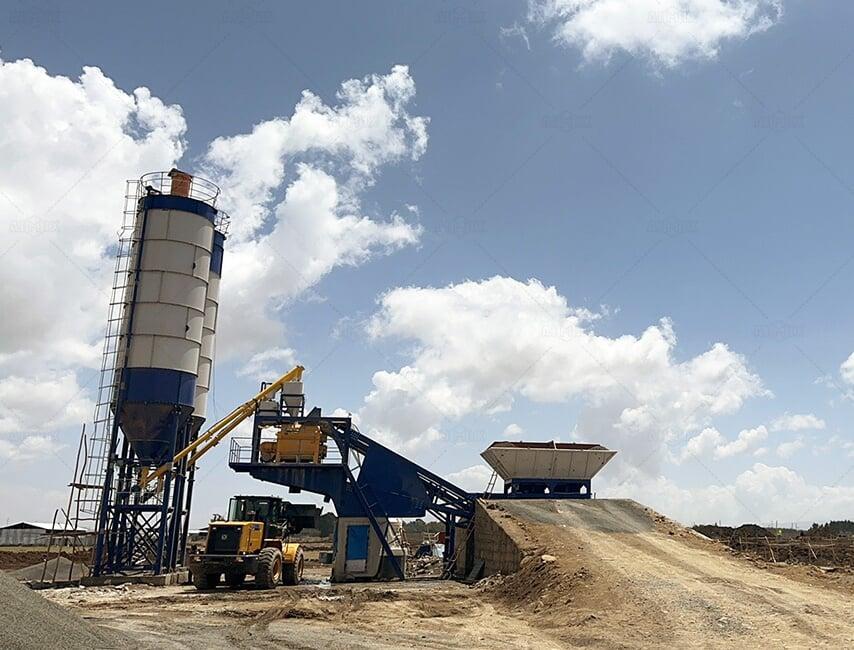
A portable concrete batching plant in UAE is worth considering when rehabilitation projects involve multiple work zones, temporary production areas, or changing site boundaries. Its suitability depends on the transport configuration, assembly requirements, production capacity, and availability of supporting utilities. Contractors should distinguish between transportability and rapid deployment. A plant may be designed for convenient transportation, but foundations or ground preparation, electrical connections, calibration, commissioning, and material handling arrangements can still affect the overall setup period. Before mobilization, the project team should verify the access route, unloading area, ground-bearing capacity, aggregate storage space, and distance to the active paving operation. The deployment schedule should include sufficient time for installation and testing rather than assuming that concrete production can begin immediately after delivery.
Mini Mobile Plants for Localized Repairs
A mini mobile concrete plant in UAE may suit smaller rehabilitation tasks that require modest, intermittent quantities of concrete. Examples include repairing kerbs, reinstating drainage channels, replacing damaged pavement sections, and carrying out localized concrete works around road infrastructure. For these applications, a large production line may occupy excessive space or require more material-handling capacity than the project needs. A compact plant can simplify site organization, particularly where road shoulders, urban access roads, or temporary work areas provide limited room. Nevertheless, nominal output should not be the only selection criterion. Contractors need to estimate the actual hourly demand, batch consistency requirements, aggregate availability, and the time needed to move equipment between locations. The selected plant should deliver sufficient usable output without creating excessive idle capacity or material shortages.
Coordinating Plant Capacity with the Construction Schedule
Calculate Demand Before Setting the Production Start Time
The required plant capacity depends on the volume of concrete needed during each rehabilitation phase and the hours available for placement. A straightforward planning calculation is: Required average output = Total concrete volume ÷ Available production time For instance, if a project requires 120 m³ of concrete over six hours of production, the required average output is 20 m³/h. The contractor should then allow for realistic production interruptions, concrete testing, equipment servicing, and changes in placement demand. The plant's nominal capacity should exceed the calculated average when the project needs a buffer for interruptions or concentrated placement periods. However, excessive capacity will not necessarily improve productivity if the paving crew, transport arrangements, or placement equipment cannot accept concrete at the same rate.
Coordinate Production with Material Supply and Placement
A well-planned concrete batching plant in UAE must operate in coordination with aggregate deliveries, cement replenishment, water availability, and the paving or repair crew. Even a plant with adequate theoretical output can become a bottleneck when one supporting activity falls behind. The schedule should identify delivery deadlines, stockpile requirements, equipment inspection periods, and contingency arrangements for unexpected interruptions. Where concrete must meet specified strength, workability, or setting requirements, the mix design and quality-control procedures should also be established before production starts. Regular communication between the plant operator, site supervisor, transport team, and placement crew helps maintain a balanced production rhythm. It also enables the team to adjust output when a road section becomes available earlier or later than expected.
UAE-Specific Factors That Affect Deployment Timing
Heat, Access Restrictions, and Site Readiness
High ambient temperatures can accelerate moisture loss and affect concrete workability, making production timing and concrete handling particularly important during hot-weather construction. Contractors should follow the project specifications and applicable requirements for concrete temperature, delivery, placement, and curing. The deployment plan must also account for local access conditions. Urban work zones may have restricted delivery periods, limited equipment entry points, or insufficient space for aggregate storage. Highway projects may require carefully coordinated access for heavy vehicles and mobile equipment. Site readiness should be confirmed before the plant is transported. This includes verifying the permitted installation area, utility arrangements, safe vehicle movement, and any required approvals. Addressing these details early reduces the risk of equipment arriving before the work zone is ready.
Build Relocation and Contingency Time into the Schedule
Rehabilitation programmes can change because of weather, unexpected pavement damage, utility conflicts, or delayed traffic-management arrangements. A rigid deployment plan may leave the plant idle when the next work section is unavailable. Contractors should establish realistic time allowances for dismantling, transport, reassembly, commissioning, and trial production where relocation is necessary. Backup arrangements for material supply and alternative work sequences can also help limit disruption. A deployment calendar linked to the rehabilitation programme allows project managers to see when the portable concrete batch plant must arrive, when production should begin, and when relocation is likely to be required.
Conclusion: Match Equipment Deployment to Roadwork Milestones
Mobile concrete plant deployment in the UAE should be planned around the actual sequence of road rehabilitation rather than equipment availability alone. Nighttime closures, phased construction, concrete demand, site access, and relocation requirements all influence the appropriate plant configuration and mobilization date. By matching production capacity to placement demand, preparing the site before delivery, and allowing sufficient time for commissioning and relocation, contractors can improve schedule coordination and reduce avoidable downtime. The most suitable solution is the one that supports the project's concrete requirements, working conditions, and construction milestones throughout the rehabilitation programme.