
Urban development in Australia's major cities is a complex undertaking, defined by stringent spatial constraints, rigorous environmental regulations, and community expectations for minimal disruption. The conventional model of concrete supply—reliant on a continuous procession of ready-mix trucks from peri-urban batching plants—increasingly clashes with these urban realities. This logistical friction introduces significant schedule risk, community annoyance, and environmental cost. In response, a strategic shift is occurring toward the deployment of mini batching plant within city project boundaries. These compact, often mobile production units represent more than a mere convenience; they are a pragmatic operational solution that directly addresses the core impediments to efficient, sustainable, and socially responsible urban construction. Their implementation reconfigures the concrete supply chain from a linear, disruptive external process into a contained, managed on-site utility.
Circumventing Urban Congestion and Access Limitations
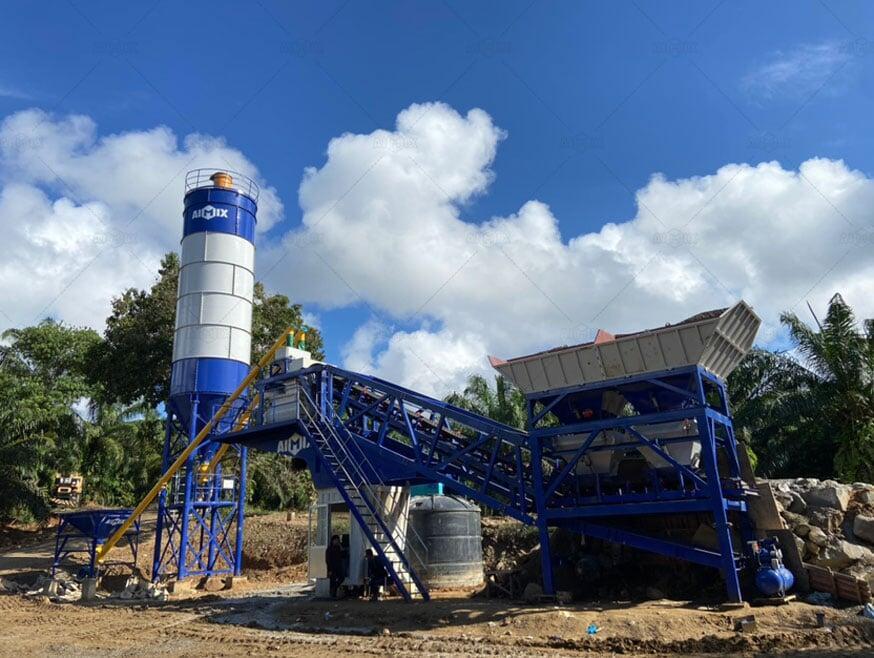
The primary impediment to traditional concrete delivery in cities is physical access. Narrow inner-city streets, active traffic corridors, and sites with limited or single-entry points cannot accommodate the constant ingress and egress of large, slow-moving agitator trucks. Each delivery becomes a logistical event, often requiring traffic management plans, causing congestion, and creating safety hazards for pedestrians and cyclists. A mini batching plant, strategically sited within the project's footprint or on an adjacent leased parcel, entirely eliminates this external vehicle traffic. Raw materials—aggregate, cement, and admixtures—are delivered in bulk at infrequent intervals, typically during off-peak hours. Concrete is then batched on-demand, directly where it is needed. This approach not only alleviates street-level congestion but also unlocks the potential of sites with severely restricted access, such as those in dense heritage precincts or behind existing structures, where truck-based delivery would be logistically untenable or prohibitively expensive.
Aligning with Sustainable and Regulatory Urban Mandates
Australian urban development is increasingly governed by sustainability frameworks and strict environmental controls. The decentralized production model of mini batching plants offers distinct advantages in this regard. The most significant is the drastic reduction in vehicle kilometers traveled (VKT) by heavy trucks, directly translating to lower Scope 3 carbon emissions associated with the project. Furthermore, on-site batching allows for precise control over mix designs, facilitating the efficient use of supplementary cementitious materials (SCMs) like fly ash or slag, which lower the embodied carbon of the concrete itself.
From a regulatory and community relations perspective, these concrete plants for sale can be equipped with integrated dust collection systems and noise-abatement enclosures, mitigating the two most common complaints associated with construction activity. Water management is also enhanced; modern mini plants often incorporate closed-loop water recycling systems, preventing contaminated runoff and conserving a critical resource. This capacity for controlled, cleaner operation aligns with the environmental performance requirements of Green Star and other rating systems, while also fostering greater social license to operate within sensitive urban communities.
Enabling Precise, Just-in-Time Delivery for Complex Project Phasing
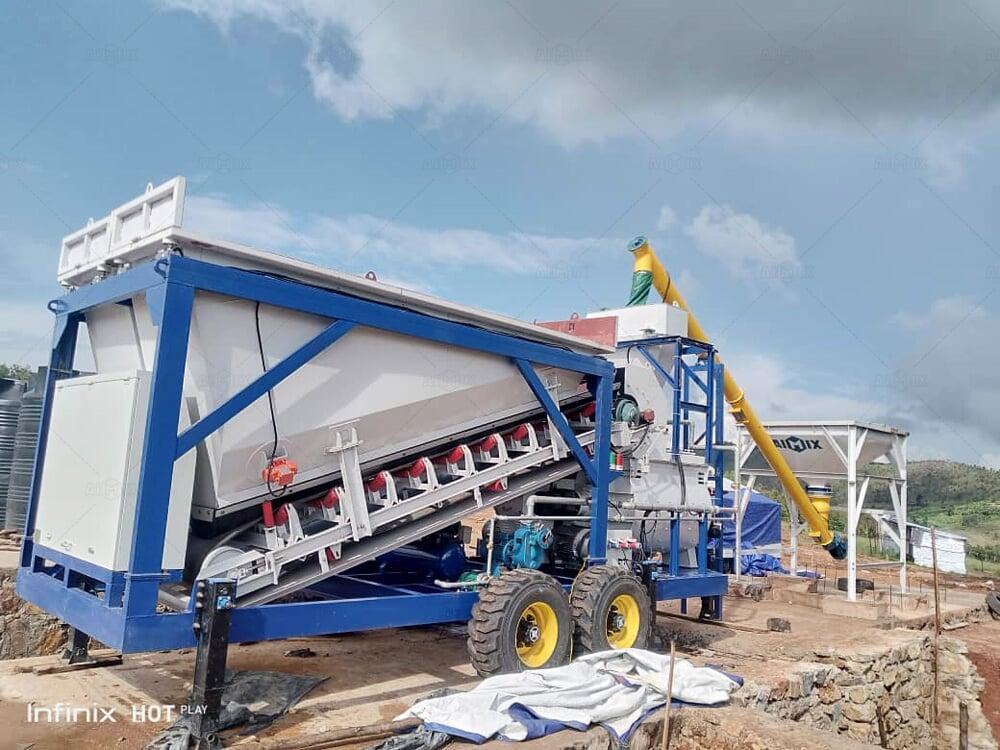
Urban projects are rarely monolithic pours. They are characterized by intricate phasing: podium decks, vertical core construction, staggered floor plates, and intricate architectural features. The just-in-time production capability of a mini batching plant is ideally suited to this cadence. Concrete can be produced in exact, small-batch quantities matched to the daily or even hourly needs of the construction schedule. This precision eliminates the waste associated with over-ordering from a central plant and removes the risk of slump loss or premature setting in transit-mixed concrete caught in traffic.
This capability is particularly valuable for complex infill developments and heritage renovations. For projects involving the restoration or adaptation of existing structures, concrete needs are often sporadic and highly specific. A mini plant can produce bespoke mixes—perhaps non-shrink grouts, lightweight aggregates, or colored concrete—in the small volumes required, without the minimum load penalties and logistical complications of engaging a commercial ready-mix supplier. It provides the architectural and construction teams with a responsive, flexible material source that can adapt to the evolving and unpredictable demands of intricate urban construction.
Providing Financial Predictability and Risk Mitigation
Beyond operational and environmental benefits, the economic case for small concrete batching plants sale is grounded in risk reduction and cost predictability. Reliance on external ready-mix suppliers introduces volatility; prices can fluctuate, and delivery schedules are vulnerable to factors beyond the project manager's control, such as city-wide traffic incidents or plant breakdowns. Internalizing production stabilizes the cost base. The majority of material costs become fixed through bulk purchase agreements, insulating the project from market spikes.
Operationally, the elimination of repeated small load charges, demurrage fees for delayed trucks, and the costs of extensive traffic management directly reduces project overheads. The streamlined workflow—where concrete production is a controlled, on-site variable—enhances labor productivity by eliminating standby time. While the capital or rental cost of the plant is a line item, it is a known, manageable expense that replaces a multitude of variable, unpredictable costs. In the high-stakes, fast-paced environment of Australian urban development, this shift from variable cost uncertainty to fixed cost management is not merely an efficiency gain; it is a fundamental strategy for de-risking project delivery and ensuring financial control from the foundation up.